
Here’s what most B2B PPC accounts get wrong: ad platforms are very good at finding cheap leads, and cheap leads are rarely buyers. This enterprise technology consultancy found that out the expensive way.
When the account came to us, Google Ads had logged 621 form fills for £11,380 and produced zero sales. LinkedIn had spent £6,434 for seven leads. We rebuilt the structure, the targeting, the offer, and the landing pages. The new leads came from VPs, directors, and executives, and they turned into £1.4M in closed-won deals. LinkedIn cost per lead fell from £919 to £25.58 along the way.
Figures are in GBP, straight from the client’s ad accounts. Client, campaign, and ad set names are blurred.
The Challenge: Paying for Leads Nobody Could Sell To
The consultancy sells technology programs to senior leaders at large enterprises. Sales cycles are long and the buying committee is small and senior, so every lead who isn’t a decision-maker is wasted budget and wasted sales time.
Broad match out of control
The inherited Google Ads campaigns relied on broad-match keywords like “how to increase business growth.” Google matched them to searches like “i don’t have money but i want to start a business” and counted the resulting contact form fills as conversions.
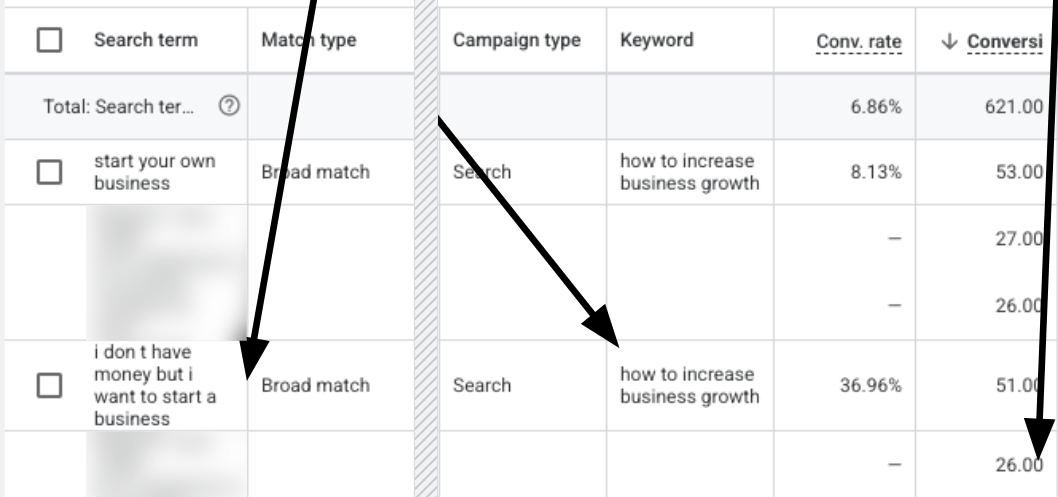
On paper, £18.33 per conversion looked efficient. In the CRM, it was £11,380 of spend with nothing to show for it.
LinkedIn at £919 per lead
LinkedIn had the opposite problem. Over about two months it spent £6,434 and produced 7 leads.

What We Changed
1. Rebuilt search into single keyword ad groups
We replaced the broad-match campaigns with single keyword ad groups (SKAGs): one keyword per ad group, ad copy written for that exact search, and negative keywords to keep Google’s matching from wandering. Each ad says exactly what the buyer typed, so buyers click and browsers scroll past.

2. Hyper-targeted LinkedIn to the exact ICP
On LinkedIn, we rebuilt the audiences around the ideal customer profile, layered by job title, seniority, company size, and industry. Each ICP got its own ad set, so spend could follow the segments that produced leads.
3. Swapped “book a demo” for downloadables
Senior buyers rarely book a demo from a cold ad. So we offered guides and ebooks instead, in exchange for a short form. Prospects traded their details for something useful, and sales got conversations with people who already understood the problem.
4. Rebuilt the landing pages
The old ads sent people to a generic contact form. We rebuilt the landing pages around one gated guide: a two-column hero with the form above the fold, proof stats and client logos up top, a clear list of what’s inside the guide, client reviews, and the same call to action repeated down the page. One page, one offer, no exits.


5. Connected GA4, Marketo, and Salesforce
Cheap leads looked good because nothing tracked what happened after the form. We set up GA4 and Google Tag Manager to capture real conversion signals, agreed a shared SQL definition with business development, tied lead status in Marketo and Salesforce to pipeline stages, and built a weekly Looker report. That closed loop is how we could see which campaigns produced pipeline, and it’s what the £1.4M figure comes from.
The Results

| Metric | Before | After |
|---|---|---|
| LinkedIn spend | £6,434 | £3.7K |
| LinkedIn leads | 7 | 86 |
| LinkedIn cost per lead | £919.14 | £25.58 to £242.03 |
| Who the leads were | Broad-match form fills, including searches like “i don’t have money but i want to start a business” | VPs, directors, and executives at global IT services, technology manufacturing, telecom software, and media companies |
| Closed-won | 0 sales from £11,380 in Google Ads | £1.4M |
Lead Quality: Decision-Makers, Not Form Fills
Cheaper leads only matter if they’re the right people. The rebuilt program reached the buying committee: VPs, directors, and executives at global IT services, technology manufacturing, telecom software, and media companies across the UK, Australia, Singapore, and the US.

Because every lead had already downloaded a guide, they arrived understanding the problem. Sales got warmer conversations with people who could sign, and the pipeline closed £1.4M in deals.
Why It Worked
- Intent over volume. SKAGs only bought searches that matched what the consultancy sells.
- The right people, not the most people. ICP targeting kept LinkedIn spend on the buying committee.
- An offer that matched the buyer’s stage. A useful guide beat a demo request for buyers who weren’t ready to talk.
- Pages built to convert. One offer, the form above the fold, and proof before the ask.
- Success measured in the CRM. Cost per conversion looked fine before. Closed-won deals told the real story.
Key Takeaways for B2B PPC Teams
- Open your search terms report. If broad match is buying searches your sales team would laugh at, your cost per conversion is lying to you.
- Structure search around intent. SKAGs give you control over which searches you pay for and what the ad says.
- Target the buying committee directly on LinkedIn, by title, seniority, company size, and industry.
- Give cold buyers a reason to raise their hand that isn’t a sales call.
- Judge every channel on SQLs and closed-won revenue, not form fills.
Want the same audit on your account? Lubble is a B2B PPC agency that ties every ad dollar to a customer. Get a free PPC consult.
FREE MARKETING CONSULT
Want results like these for your business?
A senior strategist will review your ads, search, and tracking, then send you a strategy deck. Free, with no obligation.


